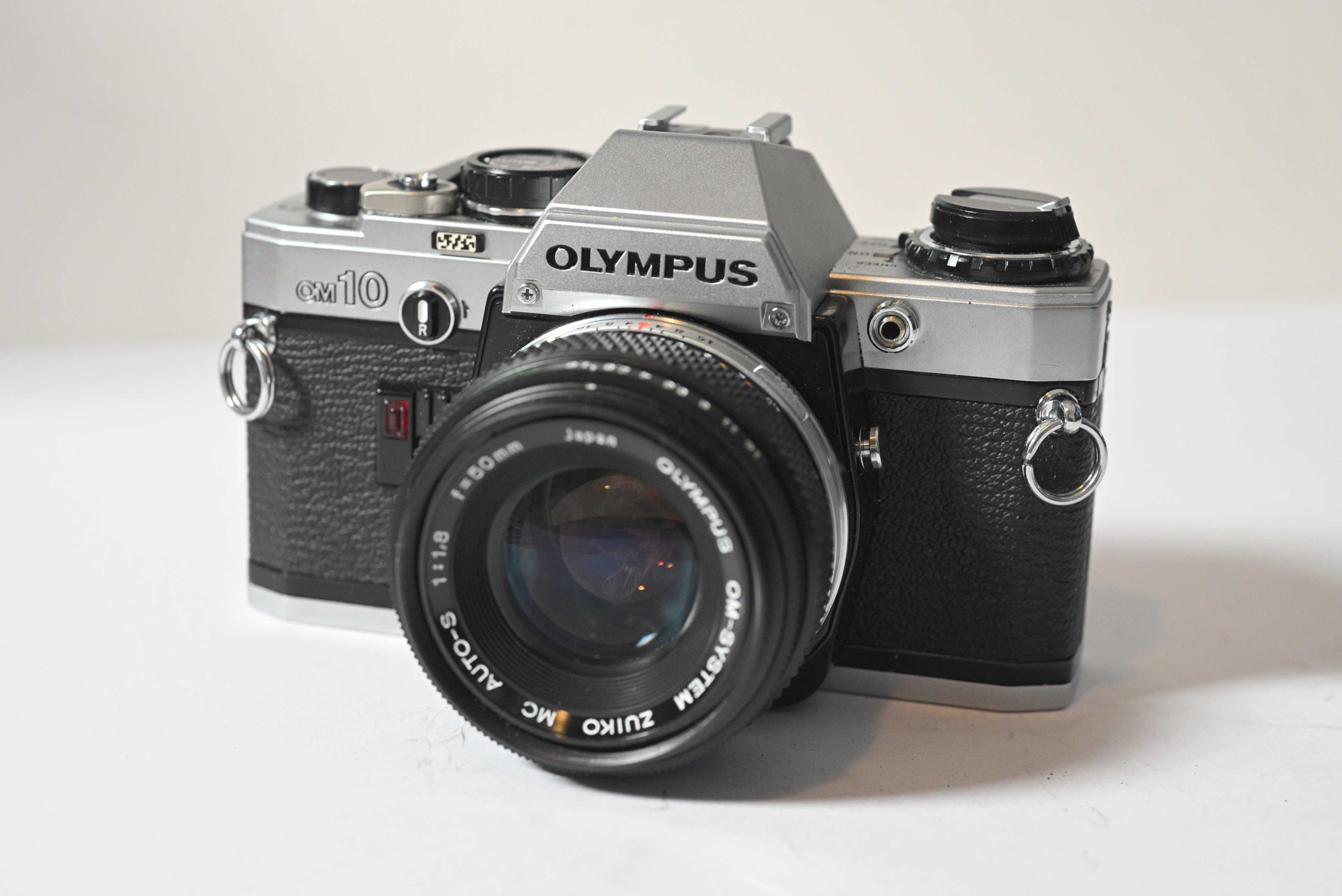
In the world of vintage SLRs, the Olympus OM series is legendary for shrinking the bulky 35mm camera into something sleek, pocketable, and beautiful. While the single-digit models (like the OM-1) were for the pros, the two-digit series brought that magic to the masses.
Released in 1979, the OM-10 was Olympus’s camera for the entry-level market. It was designed for people who wanted the prestige and lens quality of the OM system without the professional price tag or the steep learning curve.
Features of the OM-10
Aperture Priority by Default: The OM-10 was designed to be easy. In its standard form, you choose the aperture, and the camera’s computer selects the shutter speed.
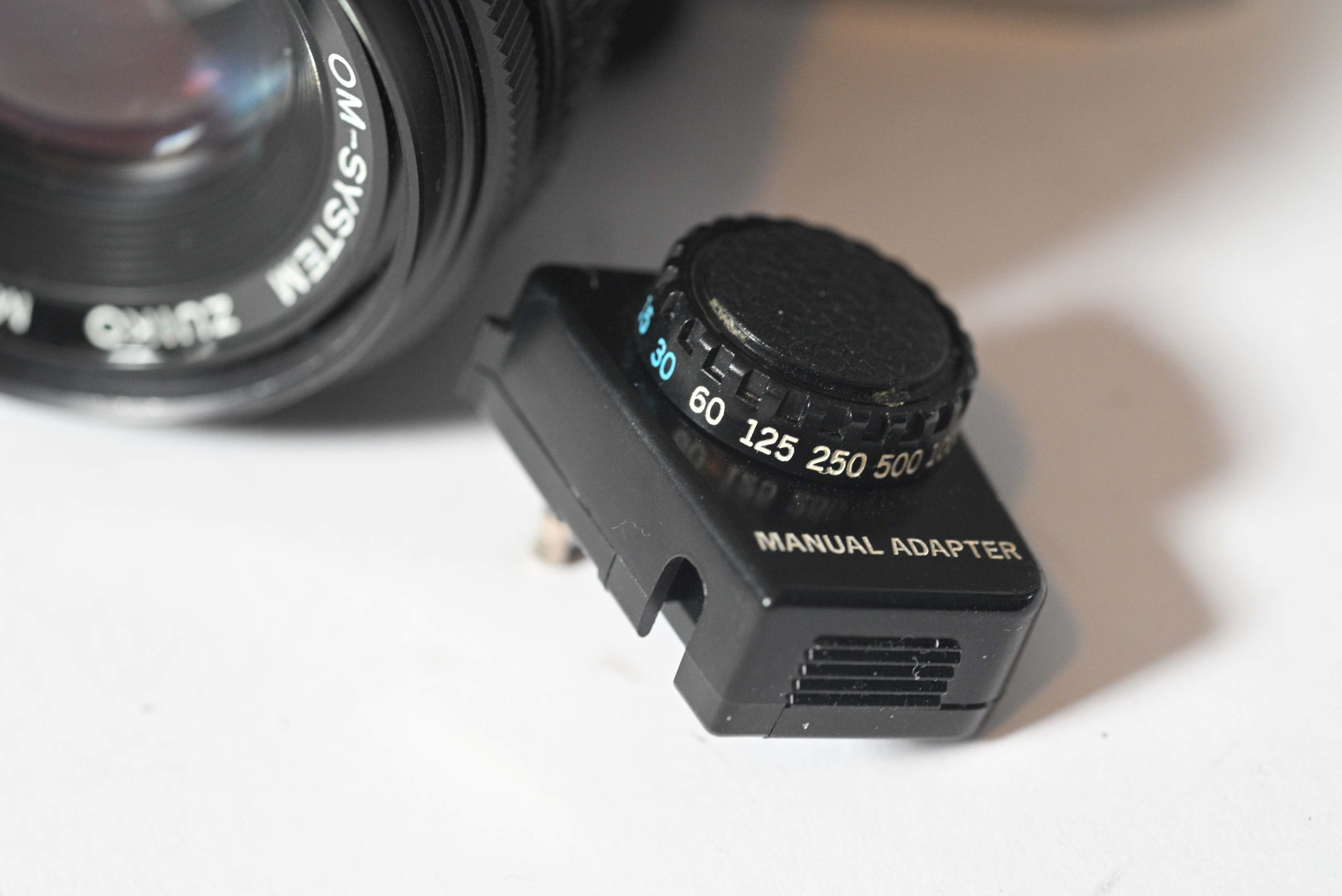
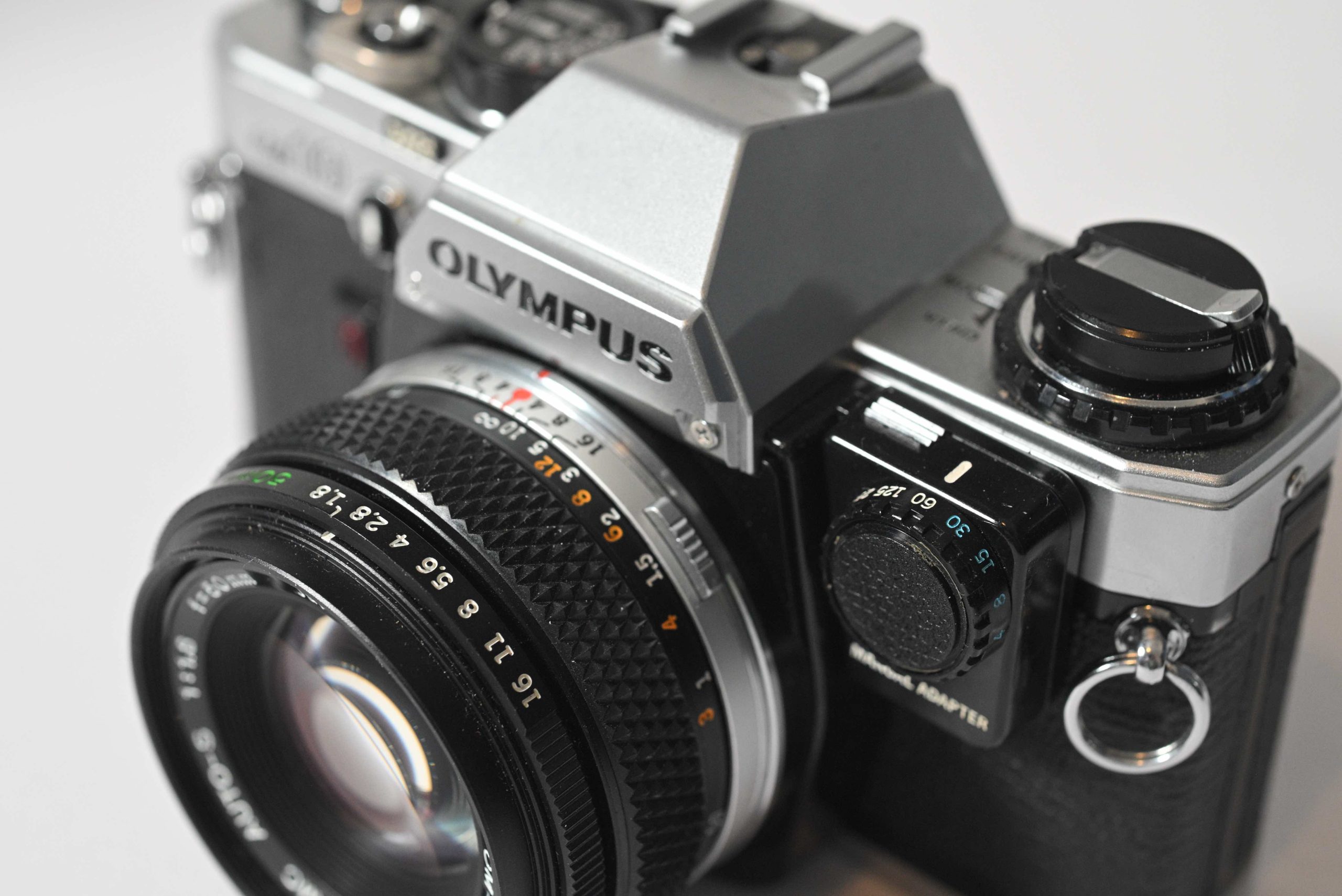
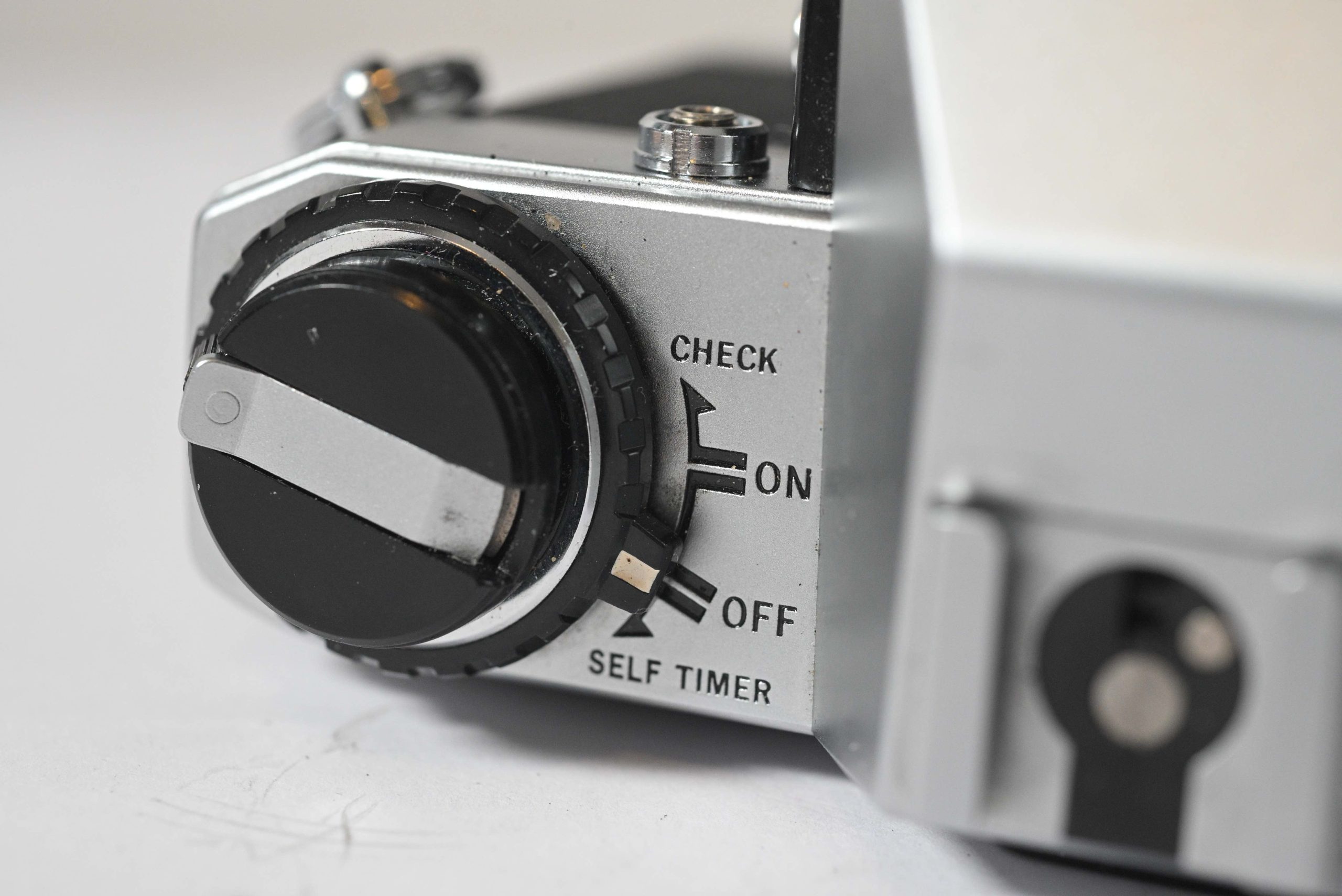
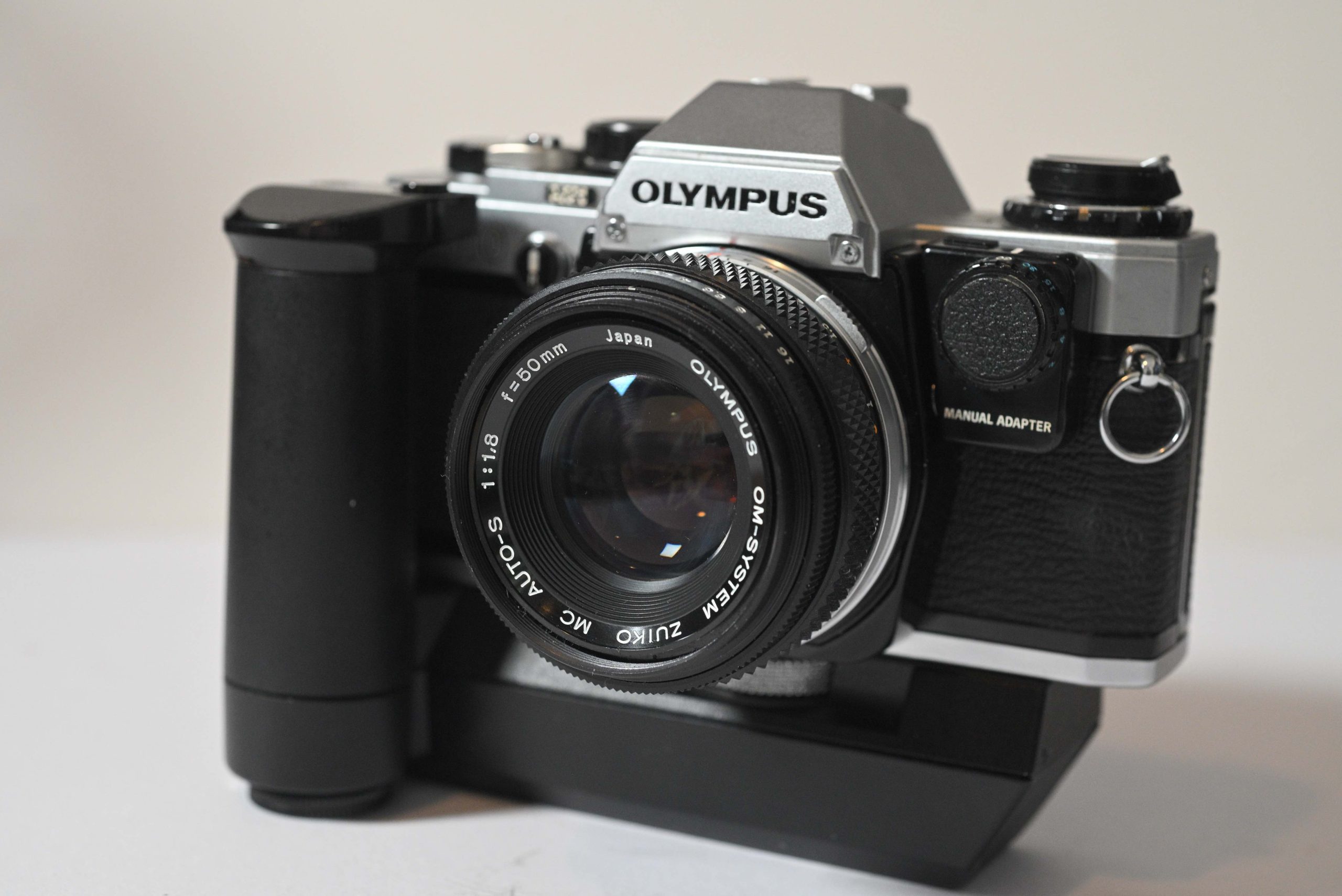
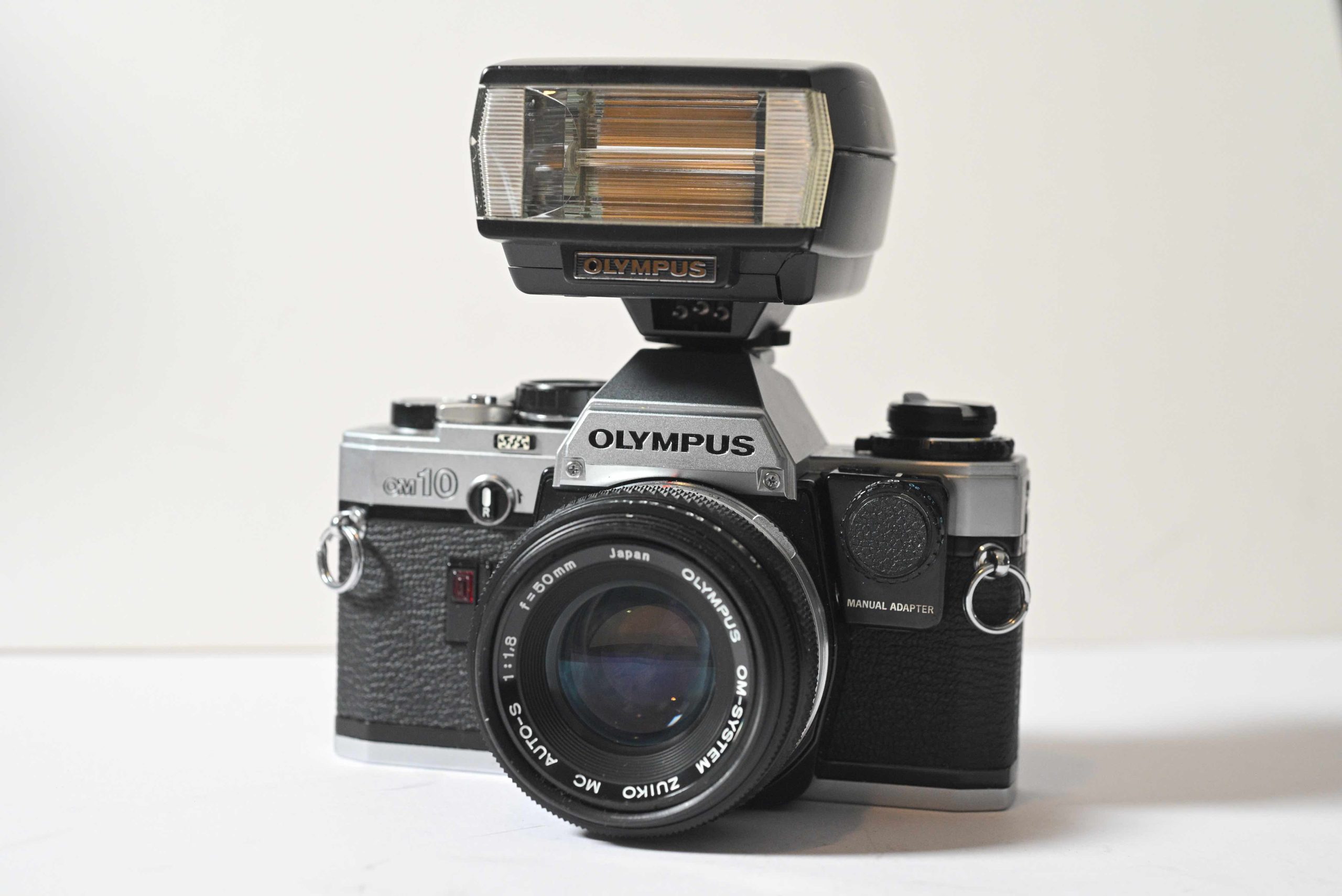
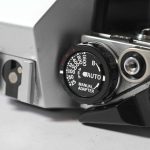
The “Manual Adapter” Quirk: Unlike most SLRs, the OM-10 did not have a shutter speed dial. To shoot manually, you had to buy a small, plug-in “Manual Adapter” that sat on the front of the body.
Light and Compact: It is incredibly light (approx. 430g), making it a favourite for travellers and students.
OTF (Off-The-Film) Metering: It shared the sophisticated light metering of its big brothers, measuring light reflecting off the film itself during the exposure for incredible accuracy.
Speeds: 1s – 1/1000th. And Bulb.
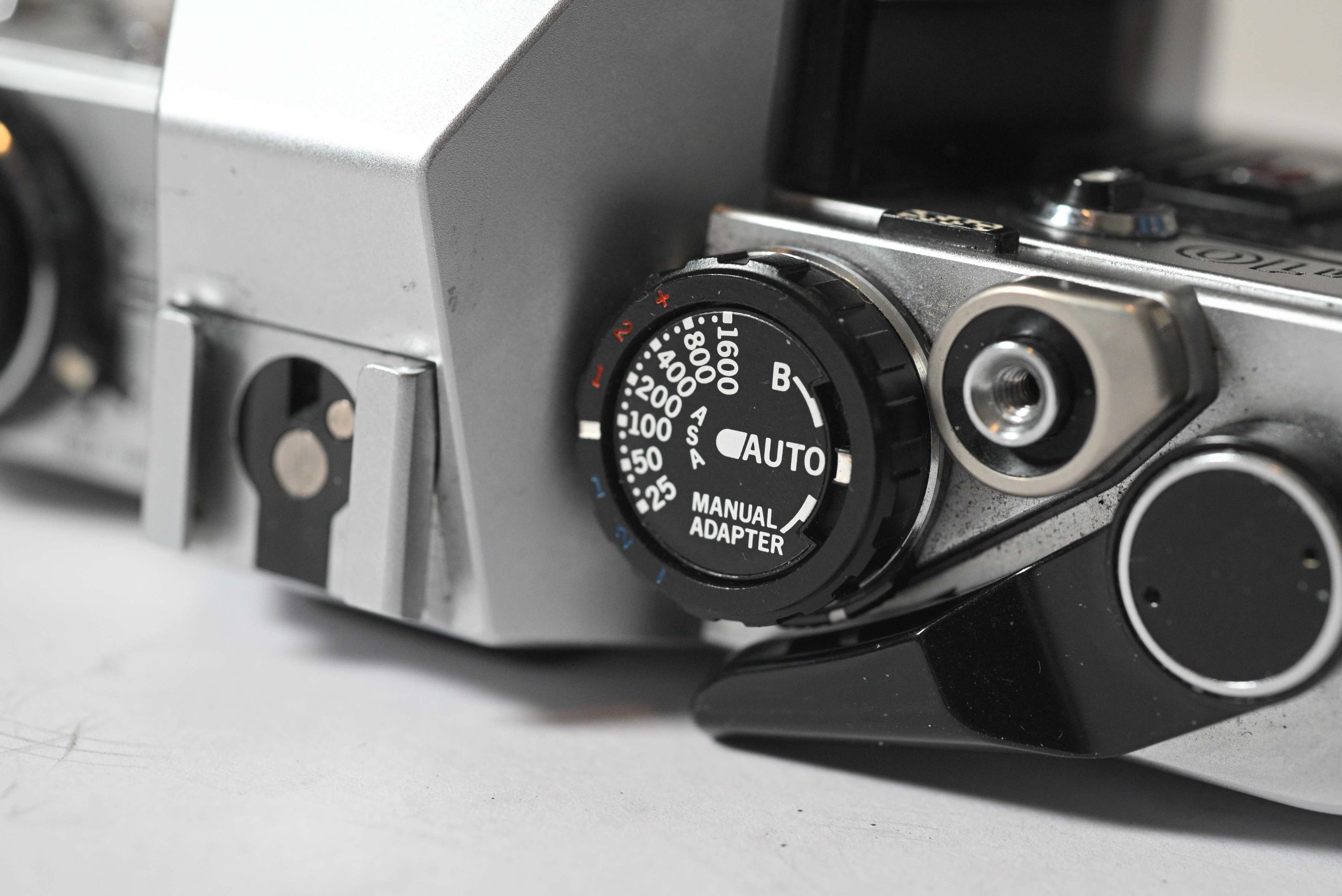
ISO: 25 – 1600
It was a massive success, but the lack of native manual control and the “fiddly” nature of the external adapter left enthusiasts wanting more. The OM-20 in 1983 answered those prayers!
Classic Look
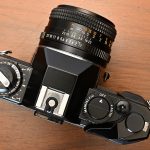
The OM-10 screams 1980s! Olympus brought this compact SLR camera to the party and all eyes were on it. It didn’t look like your regular SLR camera and certainly didn’t weigh in the same either. Its beautiful sleek design, either black or silver, ease of use and solid build quality was attracting the masses!
It was designed with ease of use in mind. You change the aperture and the camera will do the rest. An aperture priority camera. But Olympus had a trick up their sleeve to greet those amateurs that wanted to experiment with streaky night time traffic photos or fast exposed crashing waves. They gave the option of a speed adapter which you plugged into the front of the camera. It certainly wasn’t an afterthought. More of a clever marketing ploy. An up-sale maybe! The OM-10’s main function dial has the words “Manual Adapter” on it. So the user could choose to shoot Auto or Manual. Manual If they invested in the adapter. Which sat neatly on the front of the camera via a sort of mini jack pin.
Now, the OM-10 is fully complete! A camera any enthusiast would love to take on holiday sporting that large “OLYMPUS” strap just to show others around the safari trip that they meant business. A camera that any wedding photographer would happily use as a compact addition and back-up to the medium format already in their bag.
Capture the Light!
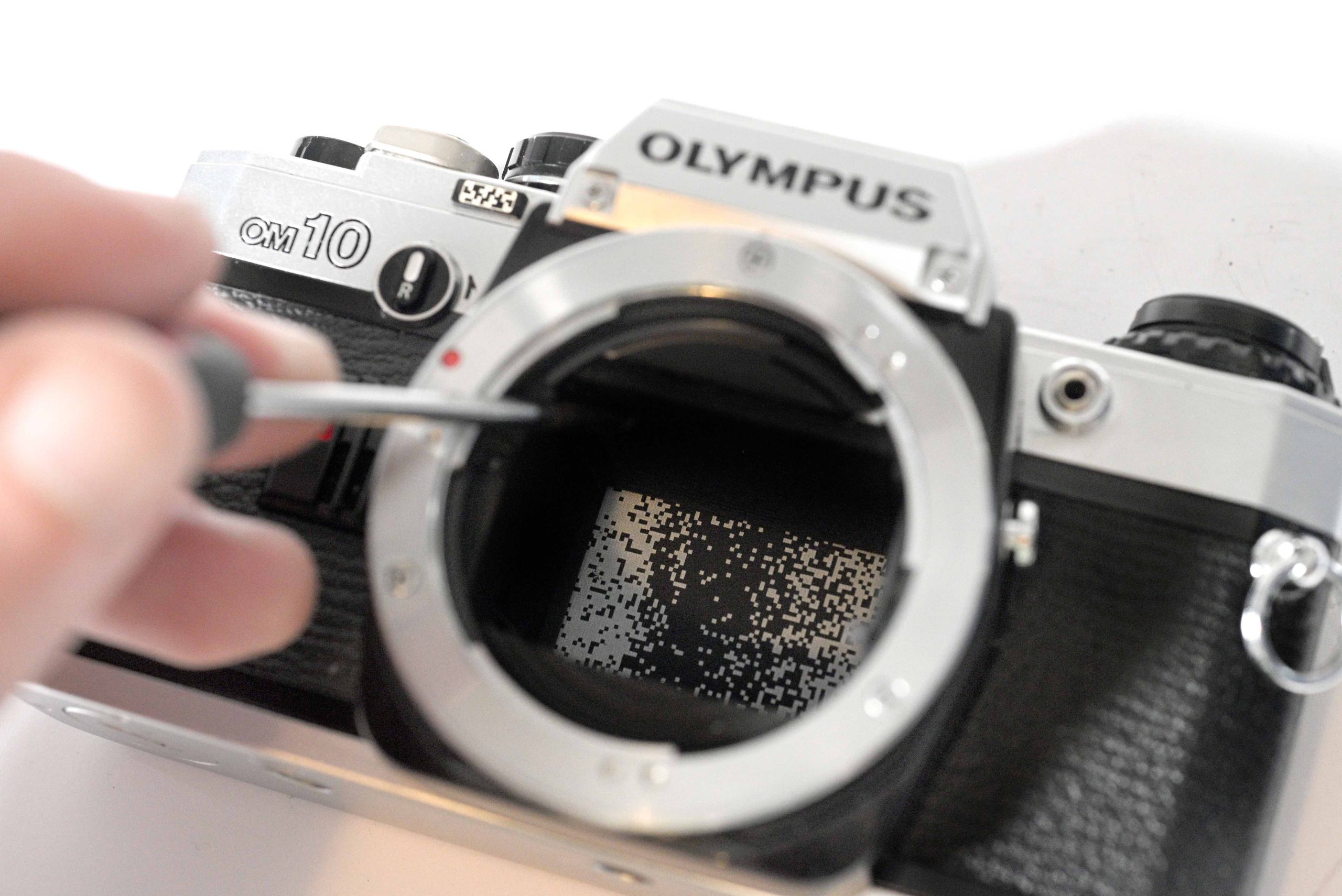
While other manufacturers had already mastered “Through-The-Lens” (TTL) metering by the 1960s, Olympus revolutionised the industry in 1975 with the Olympus OM-2, which introduced the world’s first OTF (Off The Film) metering system. And that is what the bar code emblem is on the front of the OM-10. It’s just a reminder emblem. The real bar code sits within the shutter curtain.
Warning! Be very careful lifting the mirror!
And there it is.
How does it work? Before Olympus, all SLR light meters measured the light before you took the picture. The sensors are usually located in the viewfinder (pentaprism). This has a potential flaw. The Blackout Problem. The moment you press the shutter, the mirror flips up to let light hit the film. This blocks the viewfinder sensors, meaning the camera is “blind” during the actual exposure. If the sun comes out or a flash goes off during that fraction of a second, the camera wouldn’t know.
Olympus placed the light sensors in the bottom of the camera, facing backward toward the film. For fast shutter speeds, the sensors read the light reflecting off the shutter curtain. For long exposures (where the curtain is open), the sensors read the light reflecting directly off the film while the exposure was happening.
Because film is reflective, Olympus printed a unique “computer-generated” pattern of white blocks on the shutter curtain.
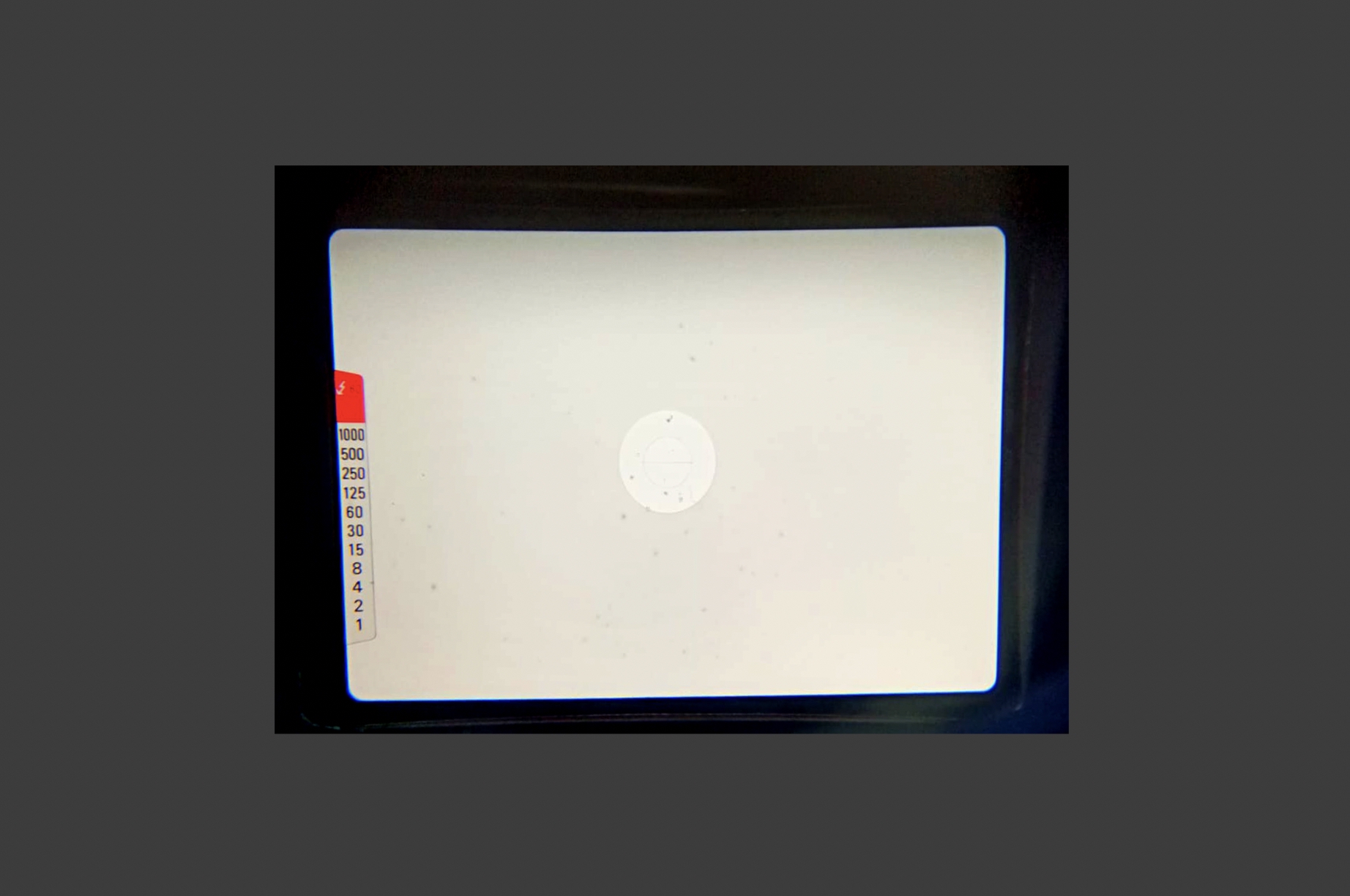
Cameraphone looking into the OM-10 viewfinder showing the metering.
Power
The camera is powered by two LR44/SR44 batteries. Can you shoot the camera without them? NO. If you cock the shutter, remove the batteries, the camera will fire but the mirror will get stuck half way. So always carry a spare pair of LR44/SR44 batteries in your camera bag. If your OM-10 suddenly stops clicking, 99% of the time, it’s just hungry for new cells!
Since these cameras are entirely dependent on electricity, the type of battery you use matters:
LR44 (Alkaline): Cheap and common, but their voltage drops steadily as they die. This can cause your light meter to become less accurate over time before the camera finally quits.
SR44 (Silver Oxide): These are slightly more expensive but highly recommended. They maintain a constant voltage until the very end of their life, ensuring your OM-10 or OM-20 stays accurate until the moment the batteries go flat.
But to be fair I use LR44 batteries in mine and have never had any problems, or at least not that I know of.
Lenses
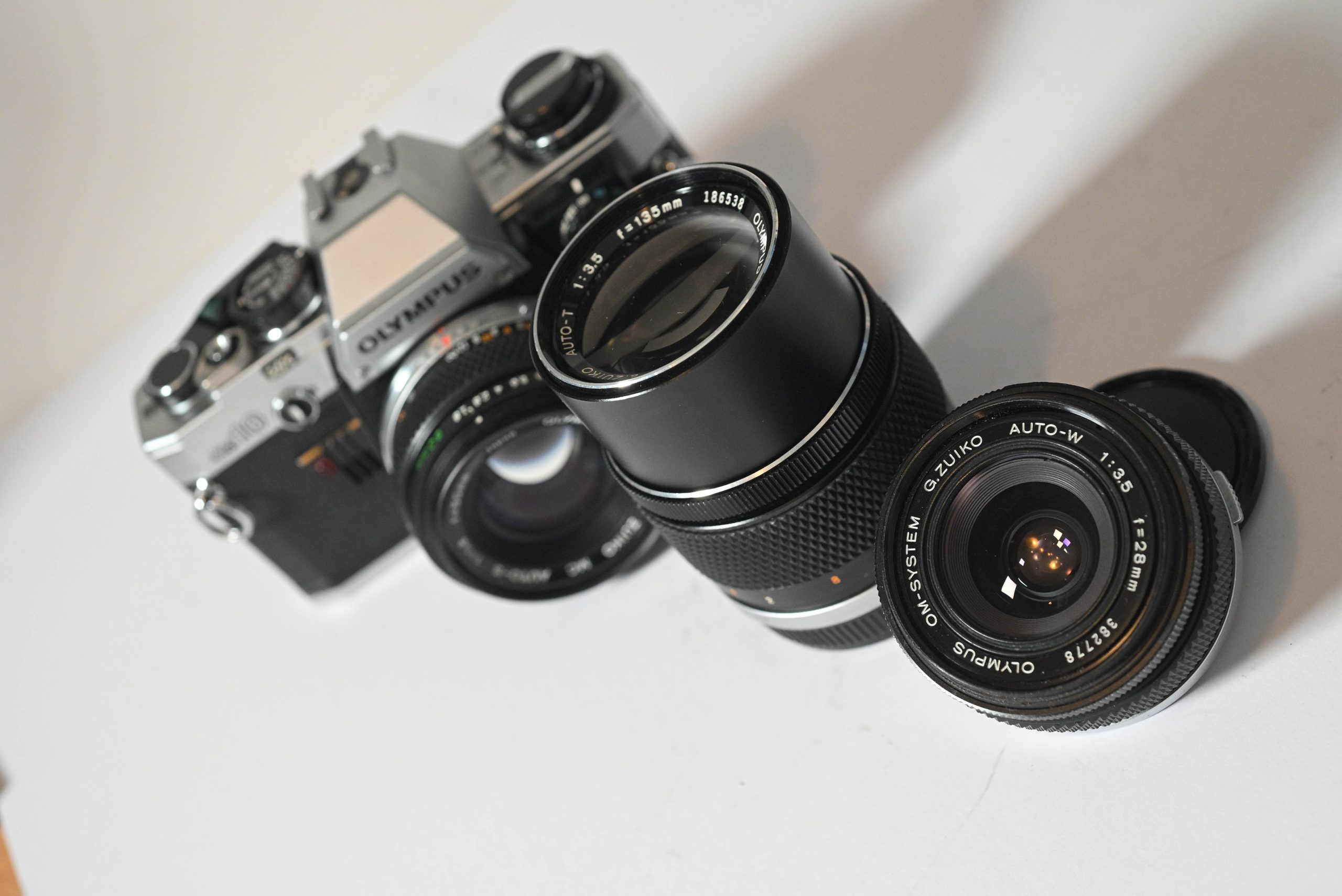
The OM System has a beautiful range of lenses and the lenses I have are the 50mm, 28mm and 135mm. My 50mm was produced after 1981/82.
How do I know? And is this important?
The “Front Ring” Era Test
Look at the text around the glass. This tells you which “generation” it belongs to:
If it says “G.Zuiko” or “E.Zuiko” and only says “Japan”, it was likely made in the 1970s. These are usually single-coated and were the original partners for the OM-1 and early OM-10s.
The letter in front of the ZUIKO name corresponds to the number of elements in the lens.
E = 5th letter = 5 elements
F = 6th letter = 6 elements
G = 7th letter = 7 elements
H = 8th letter = 8 elements
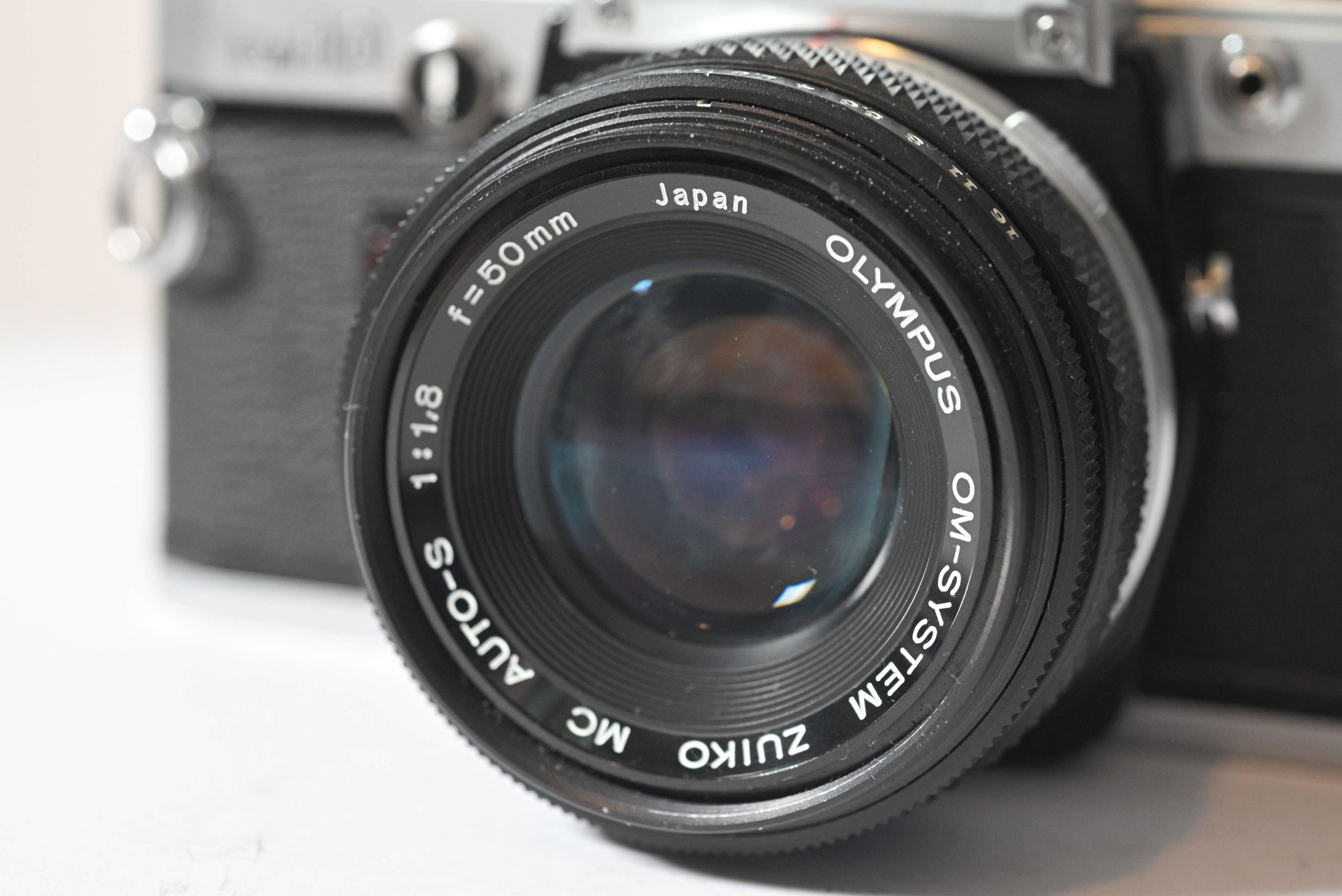
If it explicitly says “Zuiko MC” and “Japan“, it was made in the late 70s or very early 80s.
If the letter prefix is gone (just says “Zuiko”) and it says “Made in Japan” in full, you have a late-model lens from 1982 or later. These were the primary lenses sold alongside the OM-20 and were multicoated.
It’s important to know this if you are looking for Olympus glass. You may really want a multicoated lens and because it does not say “MC” on the lens you may let it go. So if the lens you are looking at says just “ZUIKO” and “Made in Japan” it’s likely to be the later lenses which were all multicoated.
You will also see AUTO-S on a 50mm lens. The S means Standard. T means telephoto and W means wide.
It’s also possible you will see a serial number on the lens. Usually the higher serial numbers, 300’000 and upwards are the more modern lenses.
Accessories
1. The Manual Adapter (The “Must-Have”)
As mentioned, the OM-10 is an aperture-priority camera by default. To unlock shutter speeds from 1s to 1/1000s, you need this tiny plastic dial that plugs into the jack on the front of the body.
Why buy it? It turns your “auto” camera into a full manual learning tool.
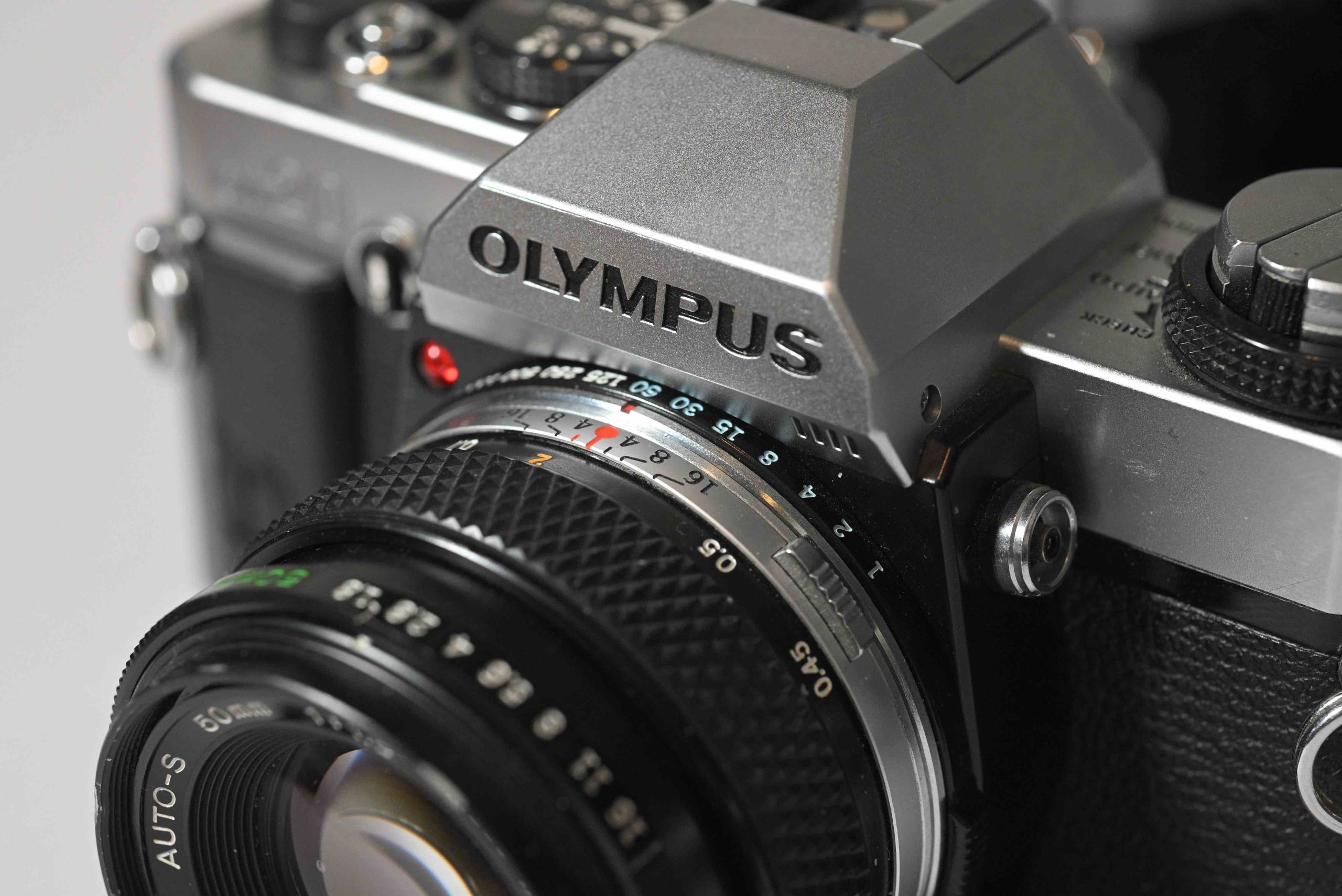
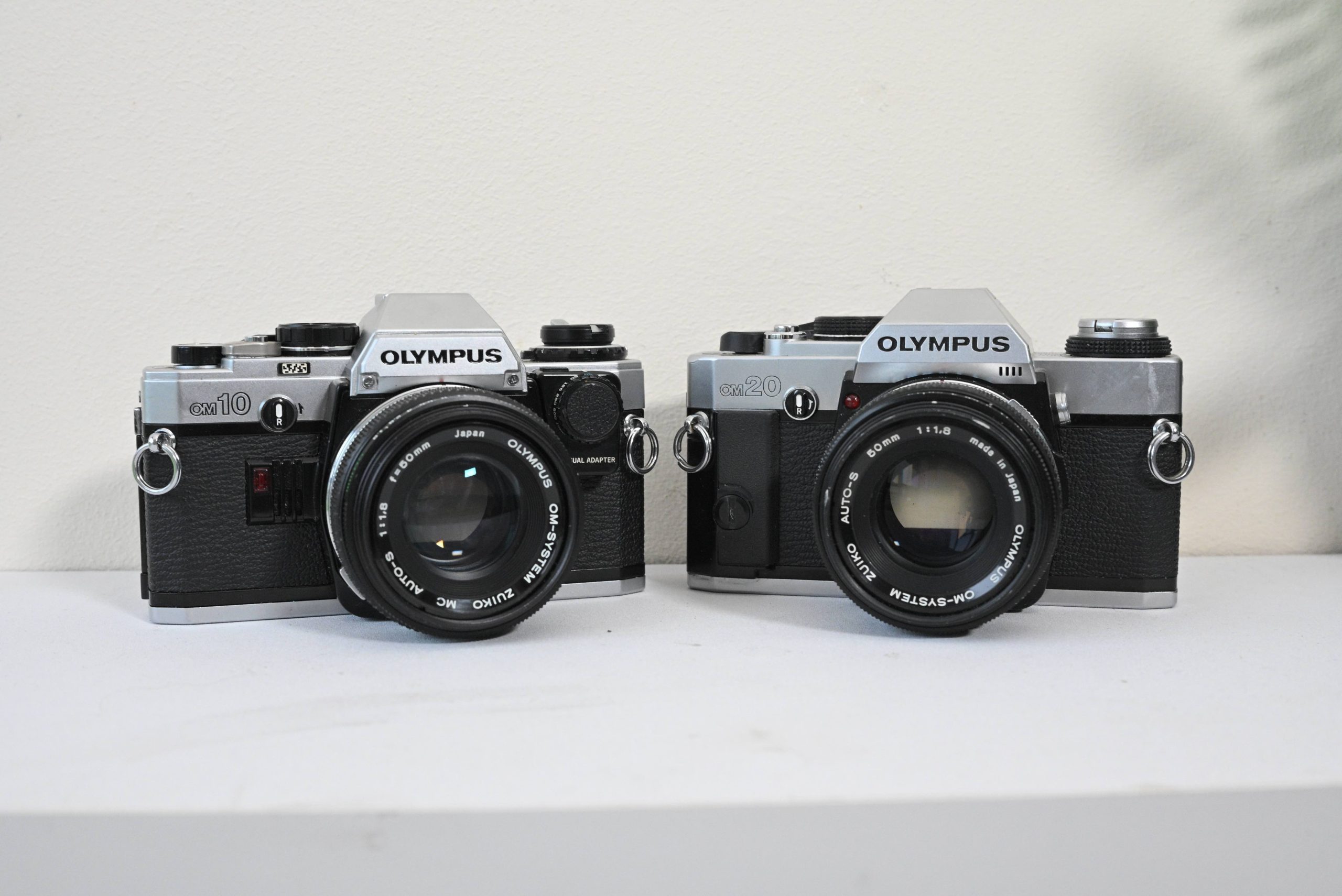
OM-20 Note: You don’t need this for the OM-20/OM-G, as the control is built into a ring around the lens mount as seen in the image below.
2. Winder 2 (The “Action” Add-on)
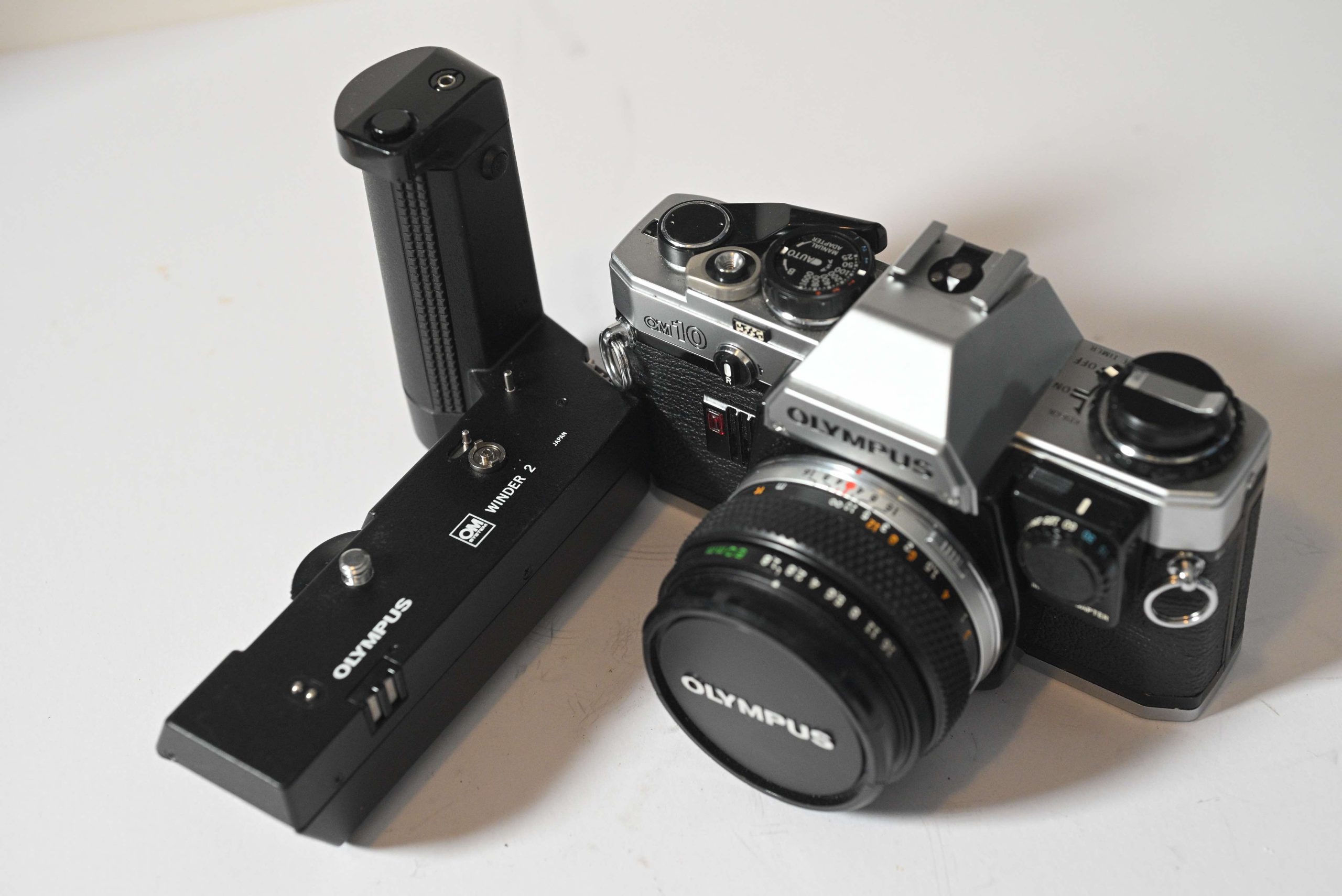
Olympus made a series of “Winders” and “Motor Drives.” The Winder 2 is the most common for the OM-10. It screws into the bottom of the camera and automatically advances the film and cocks the shutter after every shot and allows you to shoot at about 2.5 frames per second. It also adds a significant vertical grip to the bottom of the camera, making it much easier to hold if you have large hands.
3. T-Series Flashes
Because of that OTF (Off-The-Film) metering, the OM-10 works brilliantly with dedicated Olympus flashes.
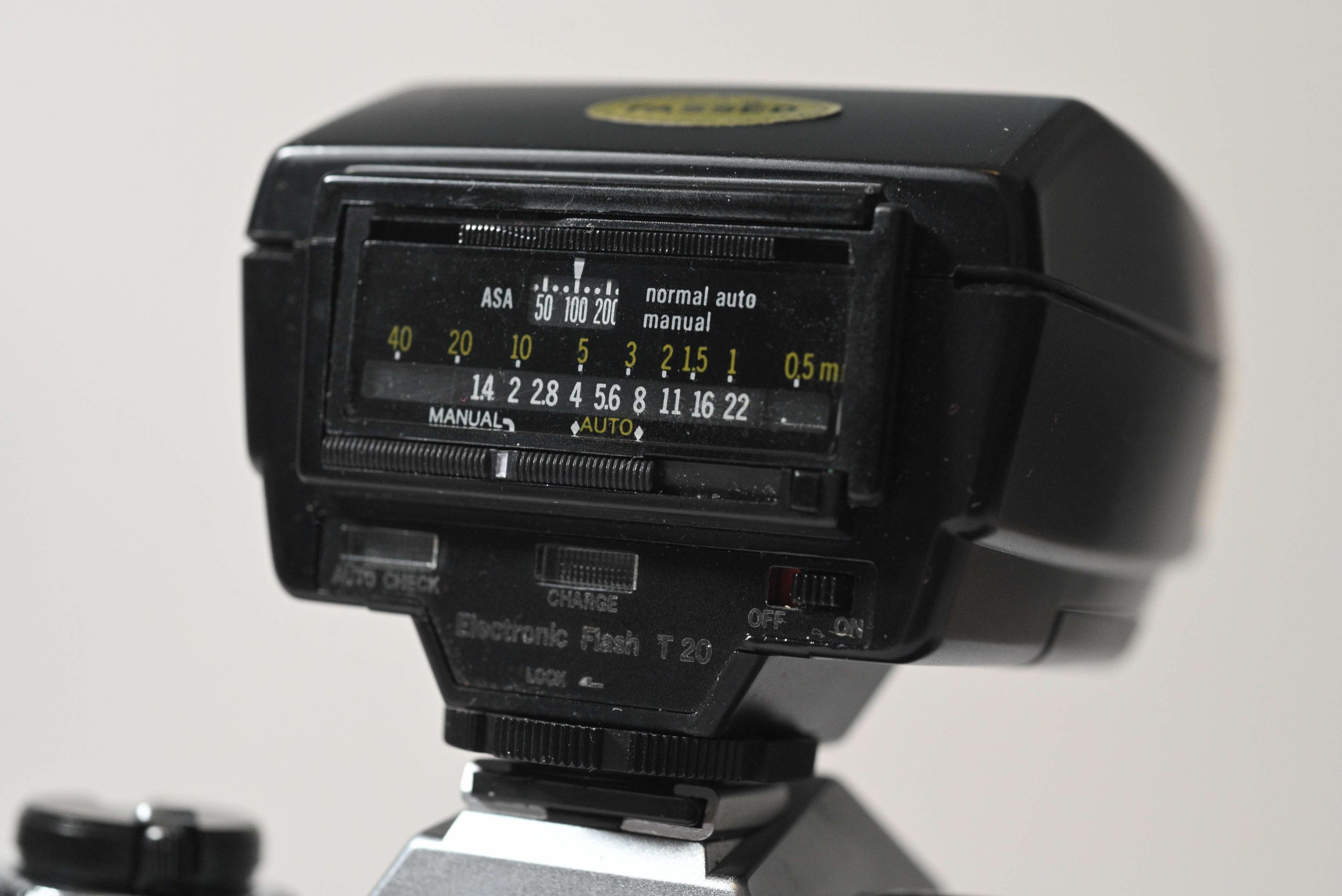
T20 Flash: The compact, classic choice. It’s small, light, and balances perfectly on the OM-10.
T32 Flash: A larger, more powerful unit with a tilting head for “bouncing” light off ceilings for softer portraits.
The Benefit: When you use these, the camera “talks” to the flash, automatically setting the sync speed and cutting the flash power the instant the film has enough light.
4. The Steady Grip (OM-20 Style)
The OM-10 has a very slick, flat front. If you find it hard to hold, you can actually find vintage screw-on plastic grips(often called “Butter Grips” or third-party steady grips).
Fun Fact: The OM-20 came with a small removable “Steady Grip” as standard, which was one of the design improvements over the OM-10.
5. Recordata Back
For the truly vintage “vibe,” you can swap out the standard metal back door of the OM-10 for a Recordata Back. This was a battery-powered door that would “burn” the date or time into the corner of your film. Note: Most of these only went up to the year 2009, so using one today will give you a very “retro” 80s date on your 2024 photos!
The Upgrade
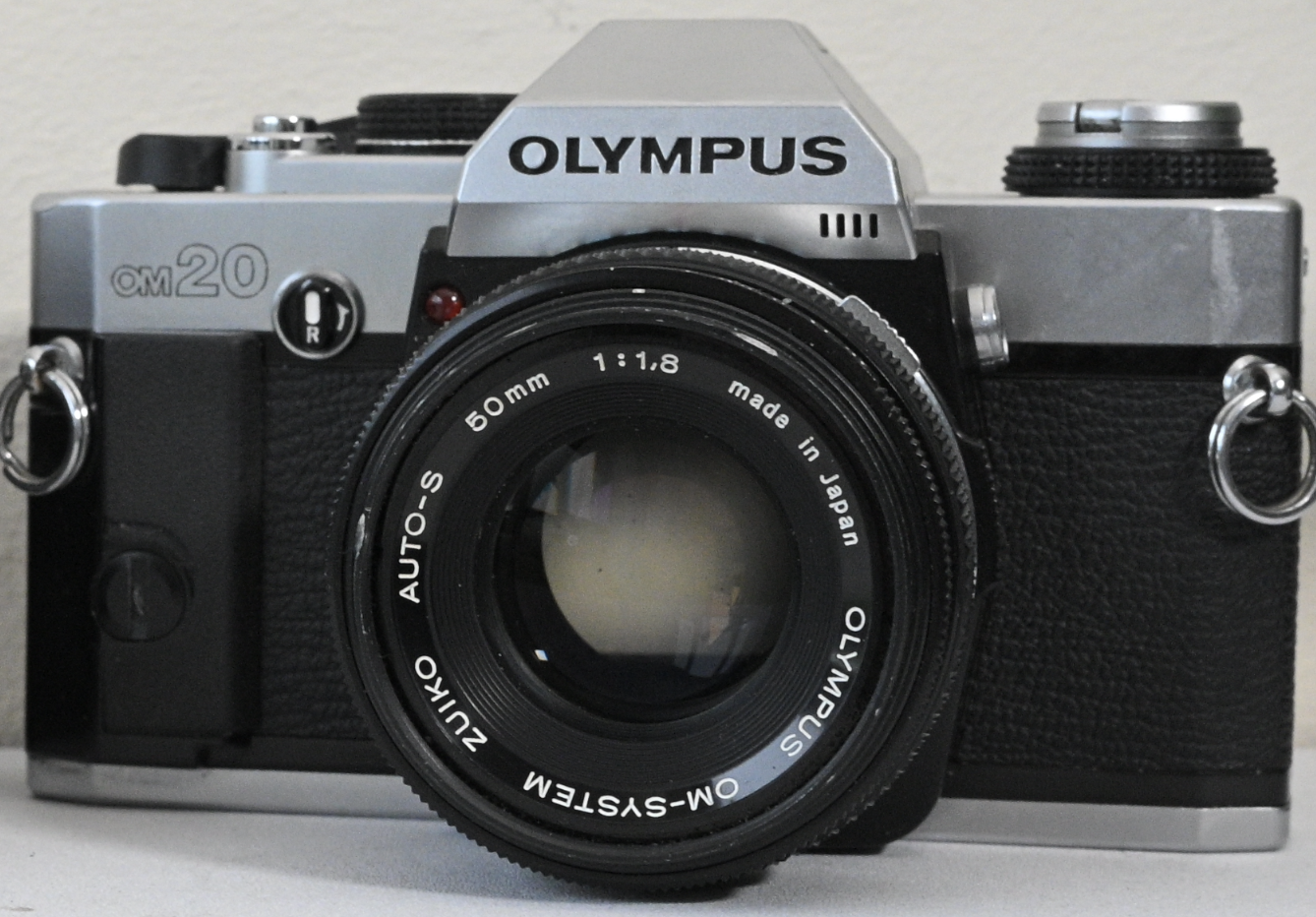
While the original OM-10 was a smash hit upon its 1979 release, four years of user feedback had highlighted two major gripes: the lack of native manual control and the somewhat slippery handling. The OM-20 was the direct answer to those complaints.
Interestingly, Olympus didn’t immediately kill off the OM-10 when the OM-20 arrived. Both cameras were sold side-by-side until about 1987, offering buyers a choice between the absolute “budget” entry (OM-10) and the “enthusiast” upgrade (OM-20).
A Quick Timeline of the “Two-Digit” Series:
1979: Olympus OM-10 (The Pioneer)
1980: OM-10 QD (Quarter Century version with a fixed data back)
1982: OM-10 FC (A US-specific bundle that included the Manual Adapter)
1983:Olympus OM-20 / OM-G (The “Fixed” Successor)
1983: Olympus OM-30 (An early experiment in focus-assist/autofocus)
1985: Olympus OM-40 (The final evolution with “Program” mode and matrix metering)
Why did I buy an OM-20?
To me, after having the use of an OM-10 for some time, the OM-20 was a no-brainer. Pretty much the same camera, same classic compact Olympus look and feel and the OM-10, except the OM-20 had the shutter speed dial built in. So there was no chance of ever losing the fiddly little thing!
The OM-20 also upgraded the focusing screen being slightly brighter than the OM-10. The OM-20 also came with a small grip making taking photos a bit more comfortable.
The OM-20 also had an upgrade inside the viewfinder with the metering table. Whereas the OM-10 would display ALL the speeds and indicate your speed with a red dot the OM-20 just Shows the speed number and hides all the others.
With the OM-10 being as popular now as it was back in the days of the Fonze (Happy Days), and the price you can pick them up for online I decided to grab one before the prices increase anymore or before they are all broken!